

Volume 9, Issue 1 (Continuously Updated- In press 2026)
Func Disabil J 2026, 9(1): 0-0 |
Back to browse issues page




Download citation:
BibTeX | RIS | EndNote | Medlars | ProCite | Reference Manager | RefWorks
Send citation to:


BibTeX | RIS | EndNote | Medlars | ProCite | Reference Manager | RefWorks
Send citation to:
Olatunji Ojedoyin O, Nadasan T, Olagbegi M O, Govender P. Knowledge, Awareness, Implementation, and Adherence to Physical Activity, Physical Fitness, and Sedentary Behaviour Guidelines among Primary School Children in Lagos: A Multi-Stakeholder Perspective. Func Disabil J 2026; 9 (1)
URL: http://fdj.iums.ac.ir/article-1-336-en.html
URL: http://fdj.iums.ac.ir/article-1-336-en.html
Olusegun Olatunji Ojedoyin *1 

 , Thayananthee Nadasan2 , Michael Oladapo Olagbegi2 , Pragashnie Govender3
, Thayananthee Nadasan2 , Michael Oladapo Olagbegi2 , Pragashnie Govender3
1- Discipline of Physiotherapy, School of Health Sciences, University of KwaZulu- Natal, Durban, South Africa. , olusegunojedoyin@gmail.com
2- Discipline of Physiotherapy, School of Health Sciences, University of KwaZulu- Natal, Durban, South Africa.
3- Discipline of Occupational Therapy, School of Health sciences, University of KwaZulu- Natal, Durban, South Africa.
2- Discipline of Physiotherapy, School of Health Sciences, University of KwaZulu- Natal, Durban, South Africa.
3- Discipline of Occupational Therapy, School of Health sciences, University of KwaZulu- Natal, Durban, South Africa.
Full-Text [PDF 783 kb]
(157 Downloads)
| Abstract (HTML) (537 Views)
Full-Text: (7 Views)
Introduction
Physical inactivity (PA) is acknowledged as a significant public health issue. Although scheduled vigorous exercise has been previously the main focus, recent years have seen greater emphasis on the concept of ‘active living’, particularly walking. Regular PA, such as moderate-to-vigorous PA (MVPA), has several health benefits, including a lower risk of heart disease and stroke, high blood pressure, diabetes, obesity, depression, and certain cancers, such as breast and colon cancers. In contrast, regular sedentary behaviour (SB) increases the risk of mortality and morbidity from chronic diseases [1]. Moreover, the World Health Organization (WHO) recommends that children aged 5 to 17 years engage in at least 60 minutes of MVPA on at least five days per week and to limit SB in daily life. Walking, running, dancing, swimming, yoga, and gardening are all examples of PA, defined as any bodily movement produced by skeletal muscles that require energy expenditure [2].
The ability to carry out everyday chores with alertness, without undue exhaustion, and with enough energy to enjoy leisure activities and respond to crises is referred to as physical fitness (PF) [3]. PF includes a wide variety of physiological and psychological characteristics that determine one’s ability to engage in physical exercise, such as cardiorespiratory endurance, muscular strength, flexibility, and performance on tests, like the 6-minute walk test and the 50-metre shuttle run. Cardiorespiratory endurance (aerobic power), skeletal muscle endurance, skeletal muscle strength, skeletal muscle power, flexibility, balance, speed of movement, response time, and body composition are some components of PF [3]
Conversely, a highly sedentary lifestyle (e.g. excessive television viewing) negatively affects cardiorespiratory fitness and cognitive skills in children and adolescents [4]. Consequently, a rise in SB can negate the health benefits of the daily dose of PA [4]. Limiting SB whilst maintaining the acceptable MVPA levels in children lowers the risk of cardiovascular disease and cognitive decline [5, 6].
Promoting PA for optimal health
Policy interventions, specifically for health promotion and illness prevention, have long been an essential aspect of the public health approach [7]. Policies can influence PA in a variety of ways. They can improve PA access by changing community design and adding bike lanes or parks. As seen by state legislation governing the quantity and quality of physical education, they have the authority to regulate [7].
Actors in the promotion of PA for optimal health
Parents and other stakeholders, like teachers, politicians, and public servants related to education and health are prominent actors in promoting PA for optimal health among school children [8]. The involvement of parents has an impact on a child’s education. This engagement is important for a child’s development and growth, since these can be done through close monitoring and, in some cases, by assisting the child with their schoolwork and attendance at school-based activities (parent meetings and education seminars) [9]. Parents’ involvement in their children’s PA can enhance the child’s chances of success and provide motivation for continued participation. Children with involved parents are energetic and ready to study; they learn to be punctual from a young age and to be persistent [10]. When parents demonstrate initiative in their child’s developmental trajectory, the child is motivated to succeed and to gain the approval and acceptance of their parents, and as they organize and perform their tasks according to a schedule, these children develop a sense of responsibility [11]. When strong collaboration exists between parents and school authorities, it can lead to improved outcomes in both physical and academic performance [11].
Multiple stakeholders (including teachers, policymakers, parents, school boards, and researchers involved in PA-related work) play essential roles in implementing and adhering to PA guidelines, as well as promoting knowledge and awareness of PA, PF, and SB. Veronesi and Keasey and also Stoker introduced the concept of democratic legitimacy, which positions stakeholders at the centre of the decision-making process [8, 12]. In this approach, a wide range of stakeholders are engaged and provided with meaningful opportunities to participate, thereby maximising the quality of the decisions made. A decision is considered more valid when multiple stakeholders are included and given sufficient opportunity to contribute, ultimately leading to the most favourable outcomes [13, 14]. This consensus-orientated model promotes openness and inclusion, strengthening the accountability of service providers to end users and the broader public [15]. Moreover, incorporating diverse stakeholders and perspectives increases the likelihood of successful policy development, implementation, and long-term adherence [16].
All parents, teachers, policymakers, and members of the public who have a vested interest in the functioning and outcomes of an educational system are collectively referred to as educational stakeholders [17]. It is well established that the provision of education is a shared responsibility among these stakeholders, who can significantly influence educational quality by emphasising the importance of effectiveness within the system. For example, stakeholders can shape the efficiency of quality-improvement processes and enhance the overall quality of decision-making. In doing so, they contribute to stronger policy implementation and adherence, ultimately improving the educational system as a whole [16, 17]. In 2012, the first global attempt to monitor countries’ implementation of PA policy began [18]. The international society of PA and health (ISPAH) developed the global observatory for PA (GOPA) to track global progress in the areas of surveillance, policy, and research. GOPA is the world’s first observatory dedicated solely to tracking and reporting health, surveillance, policy, and research indicators connected to PA. GOPA collected data for 217 countries within its first two years of existence. GOPA aimed to collaborate with a range of organisations and individuals to monitor PA using population-based public health tools and to promote increased participation in PA [19]. Governments around the world are striving to meet the WHO’s PA targets, which call for a 10% increase in global PA levels by 2025 [18]. However, in Lagos, Nigeria, PA policies have yet to be fully implemented or adhered to. Furthermore, limited information exists regarding the knowledge and awareness of key stakeholders concerning PA, SB, and PF, particularly the parents. Lagos State is located in the southwestern region of Nigeria and is one of the 36 states that make up the Nigerian federation. It is the country’s major commercial hub and has an estimated population of about 21 million people, representing roughly 10% of Nigeria’s total population of 215 million [20].
Finding out about stakeholders’ (teachers, parents, policymakers, politicians, and researchers) knowledge and awareness of PA, SB, and PF, as well as the implementation and adherence of PA policy among school learners in Lagos, would help the WHO meet its PA target of at least a 10% increase in PA for all by 2025. Therefore, the aim of this study was to examine stakeholders’ knowledge and awareness of PA, SB, and PF, as well as PA policy implementation and adherence among primary school learners in Lagos, Nigeria.
Materials and Methods
Study design
This concurrent mixed-methods study, conducted in Lagos, Nigeria, included three stages, including a survey administration for teachers on school PA policy, focus group discussions (FGD) with parents of primary school learners, and key informant in-depth individual interviews (IDI) with multiple stakeholders. Phases of the study: The study methods are described within each of the phases below.
Phase 1: Adapted school PA policy assessment (S-PAPA) [22]
Participant recruitment and sampling: Participants were recruited through face-to-face meetings. The target population included headteachers and physical and health education teachers (PHE). Sixty-one head teachers and PHE teachers (out of 80 invited) from 40 private and 40 public primary schools were recruited.
Data collection instrument: An adapted version of the S-PAPA was used. The S-PAPA was designed to measure school policy and environmental variables to the quantity and quality of children’s PA at school [21]. It comprises three sections: i) physical education (47 items), ii) recess (27 items), and iii) other before, during, and after school programmes (15 items). Only sections I and III were included in this study. The adapted S-PAPA was previously utilized in a study in Ibadan, Nigerian by Oluwasanu et al. [22], and found to be adaptable to Nigerian environment. Data analysis: Data were captured onto an Excel spreadsheet and analyzed using descriptive statistics.
Phase 2: FGD with parents of primary school children
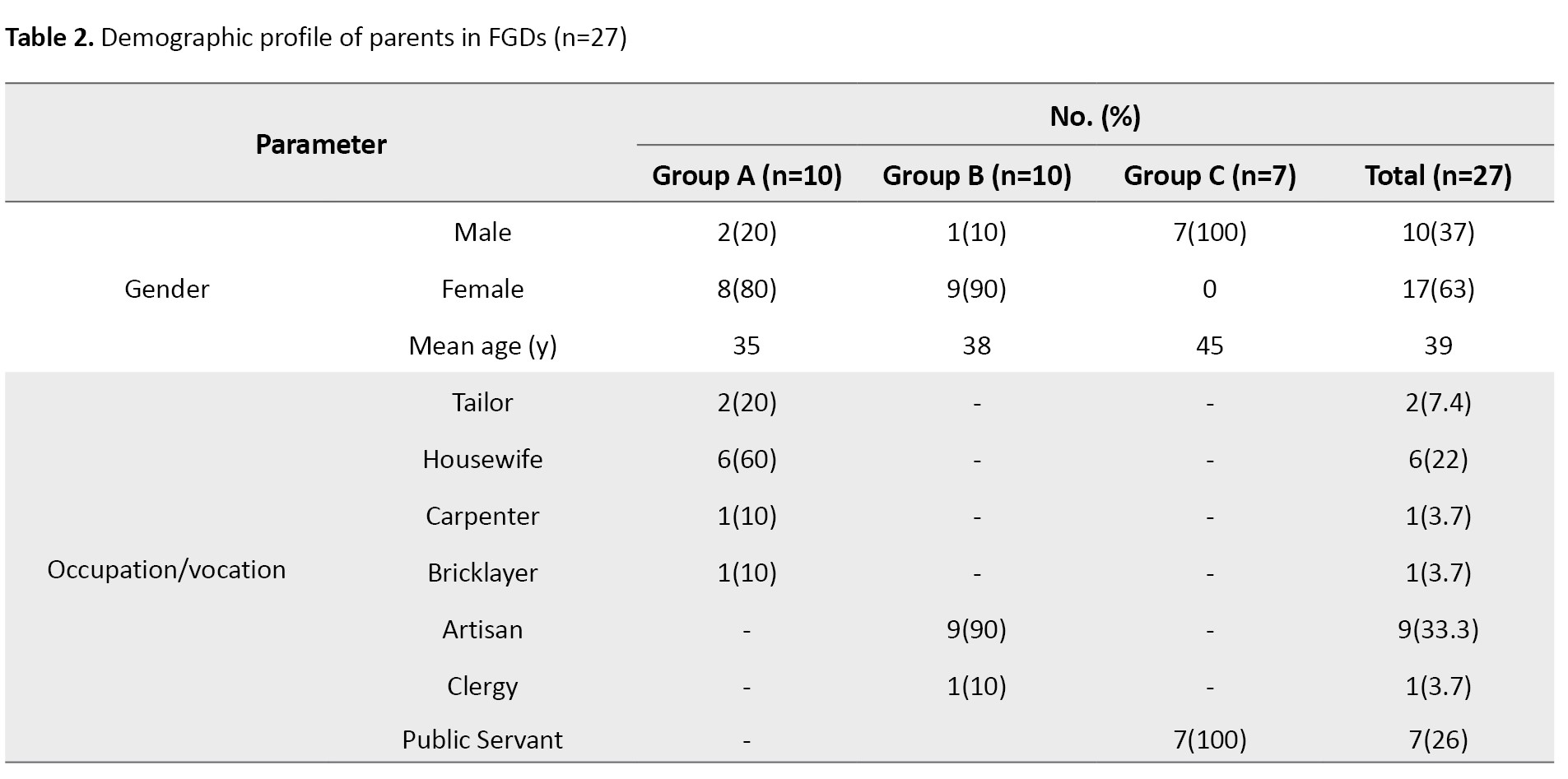
Participant recruitment and sampling: Parents were recruited via telephone calls and face-to-face meetings. Parents of children in any grade, aged between six and 12 years were recruited. Twenty-seven parents (10 in Group A, 10 in Group B, and 7 in Group C) agreed to participate.
Data collection: The FGDs were organized in a community town hall in Gberigbe, Ikorodu, Lagos. There were three groups, namely A (n=10), B (n=10) and C (n=7). A focus group schedule was developed with open-ended questions to explore the parents’ understanding and awareness of PF, PA and SB. The FGDs were audio-recorded, with 79 minutes of audio available for manual transcription.
Data analysis: The audio recordings were transcribed, and were reduced to codes and categories, and pooled to themes using thematic analysis with an inductive-deductive approach [23]. The method of analysis employed the data-driven inductive approach of Boyatzis [24], along with the deductive a priori template of codes approach outlined by Crabtree [25].
Phase 3: Key informant individual in-depth interviews (KII)
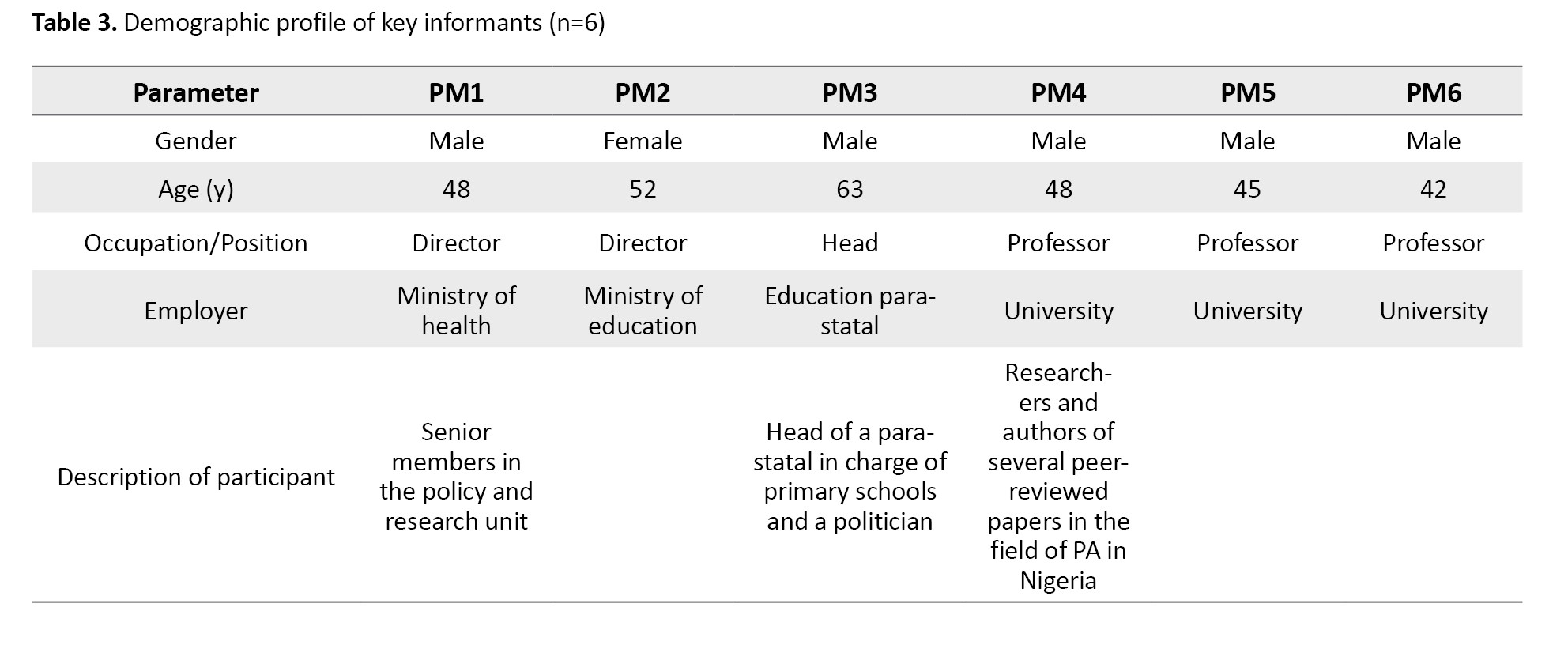
Participant recruitment and sampling: Key informants were recruited through official requests and via prior approval from relevant gatekeepers. Purposive sampling was used to recruit key informants (n=6) involved in policy development, namely directors in the ministries of education, health, and education parastatal, and academic researchers working and researching in the field with co-authored articles on PA.
Data collection: Three of the interviews were conducted face-to-face and three were via virtual interview on the Zoom® Platform, due to the COVID-19 pandemic and subsequent restrictions. Interviews were audio-recorded with a total of 232 minutes of audio available for manual transcription. Data analysis: The process of data analysis occurred as for stage 2.
Quality inference (reliability, validity, and trustworthiness)
Phase 1: Test-re-test results suggest S-PAPA items as reliable and useful in assessing PA policies in elementary schools [21]. Selected physical education items, as well as items related to the before, during, and after school programs, were found to be significant—83% (kappa=0.72) and 93% (kappa=0.79), respectively [21]. The instrument was also found to have content and construct validity. The three distinct modules provide researchers with the flexibility to assess one or all aspects of school PA programming and related policies.
Phases 2 and 3: The credibility of the study was enhanced by using purposive sampling, recruiting participants with experience as headteachers, PHE teachers, parents of children aged six to 12 years, and stakeholders directly involved in policy formulation and implementation at basic schools. Moreover, the lead coder used peer debriefing throughout the analysis to establish further credibility and improve reliability of the study. An explanation of data gathering and analysis process is reported to ensure dependability. Triangulation of data via three sources adds to the rigour of the study [26]. Transferability is maintained by including a detailed description of the participants and the study environment [27].
Ethical clearance and considerations
Gatekeeper permission was granted by the Office of the Head of Service, Lagos State Government. Phase one of the project was conducted in accordance with the Declaration of Helsinki [28], ensuring confidentiality by de-identifying all data extracted from headteachers and PHE [29]. In phases two and three, all participants provided informed consent, and pseudonyms were used in reporting the findings.
Results
The demographic profile of participants is indicated together with the results of SPAPA module 1 and module 3.
Participants’ characteristics
Tables 1, 2 and 3 present the participants’ characteristics in the three stages of this study.

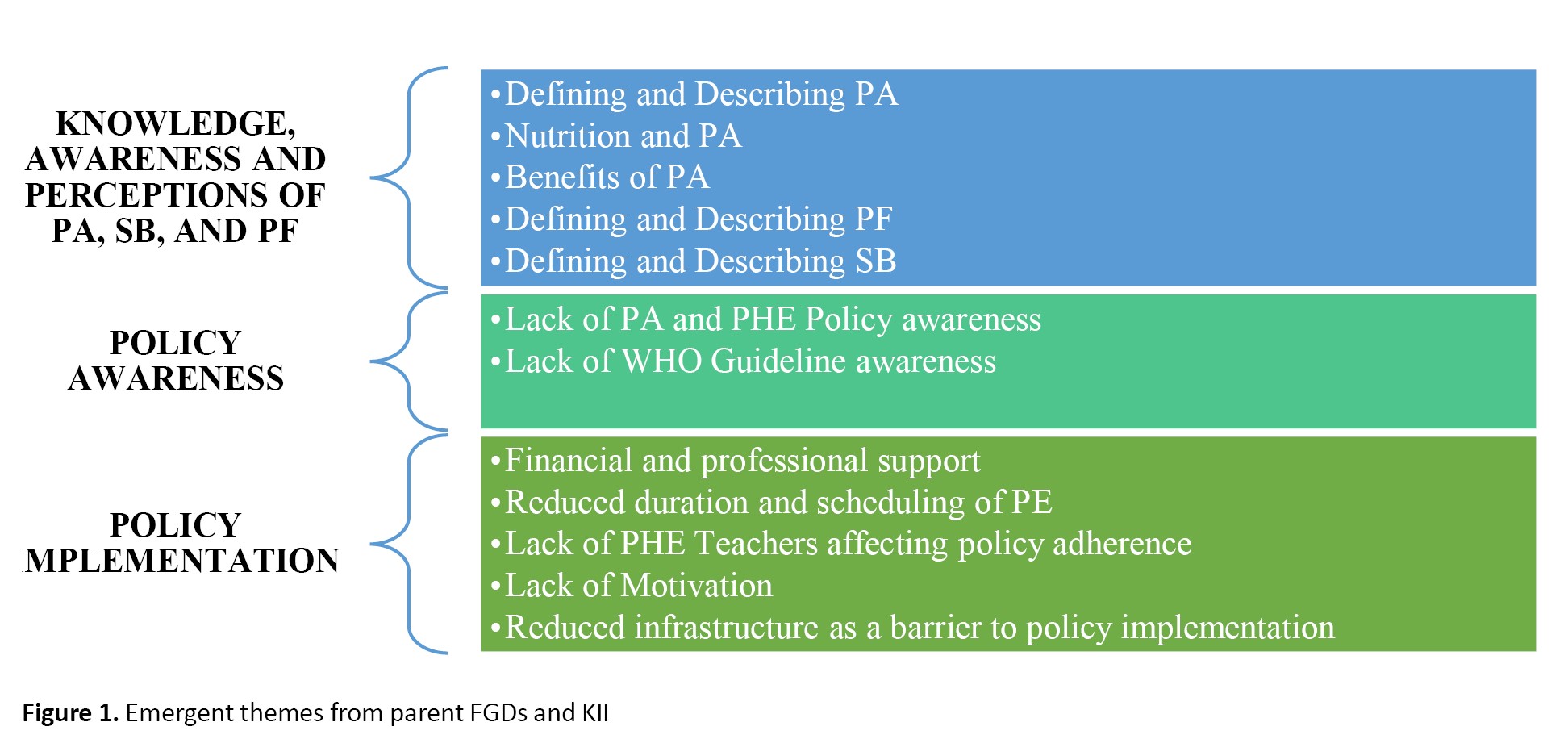
Emergent themes: Three emerging themes, along with their corresponding subthemes, are presented in Figure 1 and described in detail, and are supplemented with verbatim quotes in the following narrative.
Theme 1: Knowledge, awareness, and perceptions of PA, PF, and SB
Defining and describing PA: PA was defined and described in a variety of ways by the participants. Most participants showed partial understanding of PA, with some describing it in terms of psychomotor and cognitive learning domains.
“PA has been broadly defined as basically any movement of the skeletal contractile muscles that results in substantial energy expenditure. This construct includes a continuum of intensity (PM6, KII). … (PM6, KII)”.
“PA would include any form of activation of the muscles to expend energy, and any activity that involves muscular contraction, you know, to carry out any muscular contraction required to perform movement is literally defined as PA” (PM4, KII).
“PA is the ability to manage or transmit your mental alertness into physical activities, like exercising your body, you need a mental alertness; you need to be alert mentally before you can embark on any PA. It involves mental action; it starts from the brain (P7, FGD).”
“I think PA is first and foremost about mental alertness, to start PA you have to be mentally stable. If you are not physically or mentally strong or stable, you cannot perform well in PA” (P4, FGD).
Key informants classified PA as low, moderate, or vigorous, distinguishing amongst daily activities to describe the various levels.
“If you are talking about the pattern of physical behaviour, what comes to mind here is the type of activity that the person is doing and how they are doing it. Is it exercise? Is it walking? Is it light intensity, is it moderate intensity, or is it vigorous activity? How many of the children are doing light-intensity PA? How many of them are doing moderate-intensity PA? How many of them are doing vigorous-intensity PA? Also, how many of them are walking to school? That is active transportation. Also, how many of them are actually doing leisure recreational activity that is sport exercise?” ”(PM6, KII).
Another key informant referred to the pattern of PA, referring to how one generally engages in activities and the timing of such.
“For the pattern, it is wide. By ‘pattern’, they generally meant the type and timing of activity (e.g. only walking, only swimming, or morning-only sessions). The pattern, you know, includes all those who follow those routines based on how they prefer to engage in them, and we also discuss when they want to do it; some will tell you that they only do it in the morning (PM4, KII).”
Nutrition and its link to PA: Some of the key informants suggested that for a child to engage in proper and adequate PA, there must be adequate nutrition. Participants expressed that both leanness and obesity should be considered factors affecting PA.
“Yes, obesity is common—common in our time—but I don’t want us to become too focused on obesity and overlook leanness. It is also very common in our time. Attention has been going to obesity; we are forgetting that there are children who are starving and getting malnourished, which is a metabolic issue” (PM4).
“They may even die before the person who is obese or may not be able to participate in PA” (PM5).
Benefits of PA: Most participants were able to demonstrate their knowledge and awareness of PA by mentioning the benefits associated with / obtained from engaging in PA. Benefits mentioned included increasing mental and physical well-being and lowering mortality from non-communicable chronic diseases.
“Yes, there is a strong positive correlation between PA and pupils’ mental and physical well-being (PM3, KII).”
“WHO evidence has shown that ≥150 minutes/week of MVPA (or ≥75 minutes of vigorous intensity) for adults and at least 300 minutes for children has effects on all-cause mortality by reducing the incidence of death. It also has effects on all costs and mortality from specific diseases, for example, cancer, diabetes, and other NCDs. So, there is strong evidence that the international consensus emphasizes focusing more on the evidence that is quantitative in terms of intensity and duration rather than just on steps per day (PM6, KII).”
Defining and Describing PF: The parents did not understand PF; however, only two academic researchers could accurately define PF; parents lacked understanding. . One of the key informants referred to PF as being linked to PA.
“So, in terms of PF, individuals who are physically active are expected to achieve PF, so PF is an expected result of PA, and the two are linked. Physical inactivity and SB are nearly the same, yet their definitions differ, even though both are linked to PF. The end output that we seek from these two notions is PF (PM6, KII)”.
Another key informant indicated that PF is the ability of an individual to carry out his daily routines without undue cardiovascular or muscular pressure.
Fitness typically refers to the ability to perform daily tasks comfortably, with energy to spare. I mean, that’s when we try to distinguish between people who get tired easily from minor physical exertions and those who can go through or endure longer periods of activity. So, the conventional understanding is that someone who is labelled as healthy or physically fit is someone who can carry out his daily routines comfortably, since the basis of what we do is for people to be able to do so. As a result, those who can go about their daily routines and expend energy are desirable” (PM4, KII).
Defining and describing SB: Key informants were able to demonstrate their knowledge of SB by various definitions and extended descriptions by differentiating between physical inactivity and SB with relevant examples.
“While I’m sitting down right now, that doesn’t imply that I’m sedentary; but I become sedentary when this is what I do for a lengthy period, perhaps 2 weeks or more, or when my job requires not getting up and not moving, and that is sedentary. We all engage in sedentary activities throughout our lives, but we are not all sedentary individuals” (PM5, KII).
One participant referred to SB as any activity when one is lying or sitting down.
“SB itself is basically any activity that is done when a person is lying down or sitting down or reclining with energy expenditure ≤1.5 METs” (PM6, KII).
Another participant referred to SB as a period of inactivity.
“Sedentariness essentially has to do with a period of inactivity, you know, where people have not been engaged in any activity that is going to place a lot of demand on the muscular system. Now, with SB, it’s not necessarily from the word; it is not necessarily when someone is only seated. I mean, SB also encompasses any non- active kind of activity, any activity that doesn’t have so much task for the muscles. So, when you sit, I want to describe people who are seated throughout the day or those who sit for a longer period of time, or those who are generally inactive regardless of posture ; they would be categorized as those living a sedentary life” (PM4, KII).
Theme 2: Policy awareness
Lack of PA and PHE policy awareness: Only 18% of the teachers were aware of the existence of the PHE policy. Also, 96.7% of the teachers indicated no PA policy or policy on walking or biking to school. Most of the key informants spoke about policy awareness; however, the majority were unable to differentiate between PA and PHE policies, except for the academic researchers who were aware of the difference between PA and PHE policies and the lack of a PA policy in the country.
“The National policy on education already supports PHE; a separate PA policy is unnecessary. Then we have the national curriculum at schools embedded in our subjects in the schools and ensure where we have a policy in existence, except that you want to have another policy on this. If you want to have it, fine, but I don’t think there is any need to have a separate policy on PA. But what we should do is to ensure that what we have, that is, an existing policy on education, is followed strictly (PM2, KII).
There is limited expertise to guide the development and implementation of PA guidelines for Nigerian children and a lack of commitment among researchers to complete this route—and the other thing is lack of political will on the part of policymakers, or the government to see PA as a priority, as the priority in Nigeria” (PM6, KII).
“Most people, including myself, are unaware of any specific PA policy because none exists. There is a policy on physical education, but that’s different from a policy on PA. It will only take our own experience to be able to understand that physical education would, if properly implemented, take care of PA needs of the children. So, if you go around asking about policy on PA, no, the answer is no” (PM4, KII).
The PHE and PA policies were unknown to the parents except for one who indicated being aware of a guideline at school.
“Yes, there’s a guideline at school…(Giggles). My wife works with the teaching lessons, and she has a curriculum, and I sometimes go through it” (PC7, FGD).
Lack of awareness of WHO guideline: When probed, parents and key informants were unaware of the guidelines, except for the academic researchers who were conversant with the WHO guidelines.
Well, I’m not quite aware of that, but what I can tell you is that we have a department in our school that deals with physical activities in our school (PM3, KII). I am not aware of any WHO guideline (PM1, KII)
Theme 3: Policy implementation
Financial and professional support
Teachers and key informants provided conflicting reports regarding financial and professional support. Also, 90.2% (n=55) of teachers were either unaware of or reported receiving no financial support or indicated no financial assistance from the government for PE promotion. In addition, 85.2% (n=52) confirmed that they had no access to any known form of professional development. A key informant, however, indicated that the government earmarked a budget for the promotion of PA in primary schools.
“I must let you know that the universal basic education commission (UBEC), which oversees basic education at the national level, has earmarked 1% of the intervention fund that goes to states to take care of physical activities, sporting, and all other physical activities” (PM3, KII).
Reduced duration and poor scheduling of PE classes: The duration of PE classes in schools may be a contributing factor to effective policy implementation. Also, 51% reported PE classes lasting <20 minutes (instead of the standard 40 minutes) and 56% of them indicated the total number of PE classes in a week is between 31and 60 minutes instead of 120 minutes. A key informant indicated that most children going to school on the day of their PE classes are not actually actively engaged in PE.
“But when they are going out, they put on sportswear, they go straight to the class and sit down. They don’t do any PE classes; I have children among them. They wear sportswear and when they come back, you ask, “How was the sport?” They say we didn’t do anything, but we put on sportswear, so that is what we see; it is pathetic. The public school where we used to have PHE” (PM5, KII).
Lack of PHE teachers affecting policy adherence: The lack of adequate PHE teachers was identified as one barrier to policy adherence, as there are not enough teachers to implement the policy.
“So, they spend more time teaching than time on physical activities, combined with the fact that they don’t even have opportunities to do so, they don’t have teachers who are trained to do so, so there are a lot of issues in our schools...and that has really impacted our children” (PM4, KII).
Lack of motivation of PHE teachers: The lack of motivation on the part of the PHE teachers was found to be a likely contributor to policy implementation. Poor renumeration and lack of incentives were highlighted as being significant obstacles.
“Remuneration for public school PHE teachers is very low . So, because of this, they use the same time they have for other businesses; some use PE time to sell clothes and shoes. That is the time they go about their personal businesses” (PM5, KII).
Lack of safe infrastructure as a barrier to policy implementation: The lack of sidewalk ways was mentioned as limiting full policy implementation. One of the participants said he could not allow his children to walk to and from their schools due to safety.
“My children’s school is only a 10-minute walk away, but I cannot let them walk because of safety concerns . I know they walk when they leave school to cross the street.’ I’m not sure whose safety I’m putting my kids in when they leave school and return home. I can’t, so I’ll have to go get them or ask someone else to get them, even though the distance between the school and home is less than 10 minutes, do you understand?( KII, PM5)”
Discussion
This is the first known multi-stakeholder study in Nigeria examining multiple stakeholders’ knowledge and awareness of PA, PF and SB, and the implementation and adherence to PA guidelines for primary school learners in Lagos, Nigeria. Most of the stakeholders provided varying definitions of PA. They defined PA as any movement of the skeletal contractile muscles that results in a significant amount of energy expenditure. This indicates that most participants have a basic understanding of PA. PA is defined as “any bodily movement produced by skeletal muscle that necessitates energy expenditure [29]. This is the most frequently accepted definition of PA, published by Ainsworth et al. to contextualize the status quo surrounding definitions of PA [3, 30]. Within the research community, this definition is frequently used and accepted in a variety of health-related situations. Even major health policies around the world use the same definition [31, 32].
PA can be done in a variety of ways, while certain activities are done voluntarily and can be enjoyable, others, such as work or domestic-related physical activities, may be necessary, if not mandatory. PA is classified in several ways. It can be segmented based on a variety of factors. The simplest categorisation identifies the PA that occurs while sleeping, at work, and at leisure [33]. PA was divided into three categories: low, moderate, and vigorous. This classification was adopted by the WHO in all its PA guidelines for children, adults, and the elderly [34]. However, if done regularly and for a sufficient duration and intensity, all forms of PA can be beneficial to a person’s health.
The stakeholders interviewed also indicated the benefits of PA. Most of them agreed that PA is very beneficial to humans both physiologically and psychologically. In a review of the health benefits of PA in school-aged children and youth by Janssen et al. [35], PA was associated with numerous health benefits. The dose-response relations observed in observational studies indicate that the more PA, the greater the health benefit. Results from experimental studies indicate that even modest amounts of PA can have health benefits in high-risk youngsters (e.g. obese ones). To achieve substantive health benefits, the PA should be of at least a moderate intensity. Vigorous intensity activities may provide even greater benefit. Aerobic activities had the greatest health benefits, except for bone health, which required high-intensity weight-bearing activities. Regular PA is proven to help prevent and treat noncommunicable diseases (NCDs), such as heart disease, stroke, diabetes, and breast and colon cancer [35]. It also helps to prevent hypertension, overweight, and obesity and can improve mental health, quality of life, and well-being [35, 36].
Only the academic researchers provided accurate definitions of SB. SB can be defined as any activity performed while a person is lying down, sitting, or reclining. Although several definitions exist in the literature, the most widely accepted is a behavior with a metabolic equivalent (MET) value of 1.0 to 1.5, which corresponds to sitting or lying down [37]. It is a group of behavior characterized by low energy consumption. SB refers to activities that require very little energy and are carried out mostly in a sitting or supine position [37]; Sedentary activities are ones that need only a small amount of energy [38].
In a review of literature on SB by Park et al. they suggested that because of a shortage of appropriate locations for exercise, increased occupational sedentary habits, such as office employment, and greater penetration of television and video devices, inactive lifestyles are growing worldwide [39]. As a result, the associated health issues are on the rise. SB has a variety of effects on the human body. Lipoprotein lipase activity, muscle glucose, and protein transporter activity are all reduced by SB [39]. Activities like, lipid metabolism and carbohydrate metabolism are damaged [39]. Furthermore, by activating the sympathetic nervous system and decreasing cardiac output and systemic blood flow, it reduces insulin sensitivity and vascular function [39]. It also affects the insulin-like growth factor axis and the levels of sex hormones in circulation. Hormone-related malignancies are more common because of this. Increased all-cause mortality, cardiovascular disease mortality, cancer risk, and risks of metabolic disorders, such as diabetes mellitus, hypertension, and dyslipidemia, musculoskeletal disorders, such as arthralgia and osteoporosis, depression, and cognitive impairment are all consequences of SB [39]. Sedentary lifestyles are linked to metabolic problems, including increased plasma triglycerides and high-density lipoprotein (HDL) cholesterol [40], as well as decreased insulin sensitivity. It is well known that high concentrations lower HDL cholesterol levels in the blood [40]. As a result, both lowering SB and increasing physical exercise are critical for public health.
The interviewed stakeholders (primarily academic researchers) defined PF as a broad construct that involves two domains: The health-related domain and the physical performance domain, which is the construct that discuss about how well a person will benefit from being physically active. The health-related physical performance construct includes PF, body composition, and flexibility. This was well defined by the academic stakeholders interviewed, and most of the other participants interviewed could not provide detail on a proper definition.
PF is defined in contrast to PA, as “the ability to carry out daily tasks with vigour and alertness, without undue fatigue and with ample energy to enjoy leisure time pursuits and to meet unforeseen emergencies”[41]. The most frequently mentioned components fall into two categories: One connected to health, and the other, talents that are more athletic in nature. The health-related components of PF are (a) cardiorespiratory endurance, (b) muscular endurance, (c) muscular strength, (d) body composition, and (e) flexibility [41]. A study by Ortega and colleagues on PF in childhood and adolescence found that improvements in cardiorespiratory fitness had positive impacts on anxiety, mental status, and self-esteem [42]. They also appear to relate to greater academic achievement.
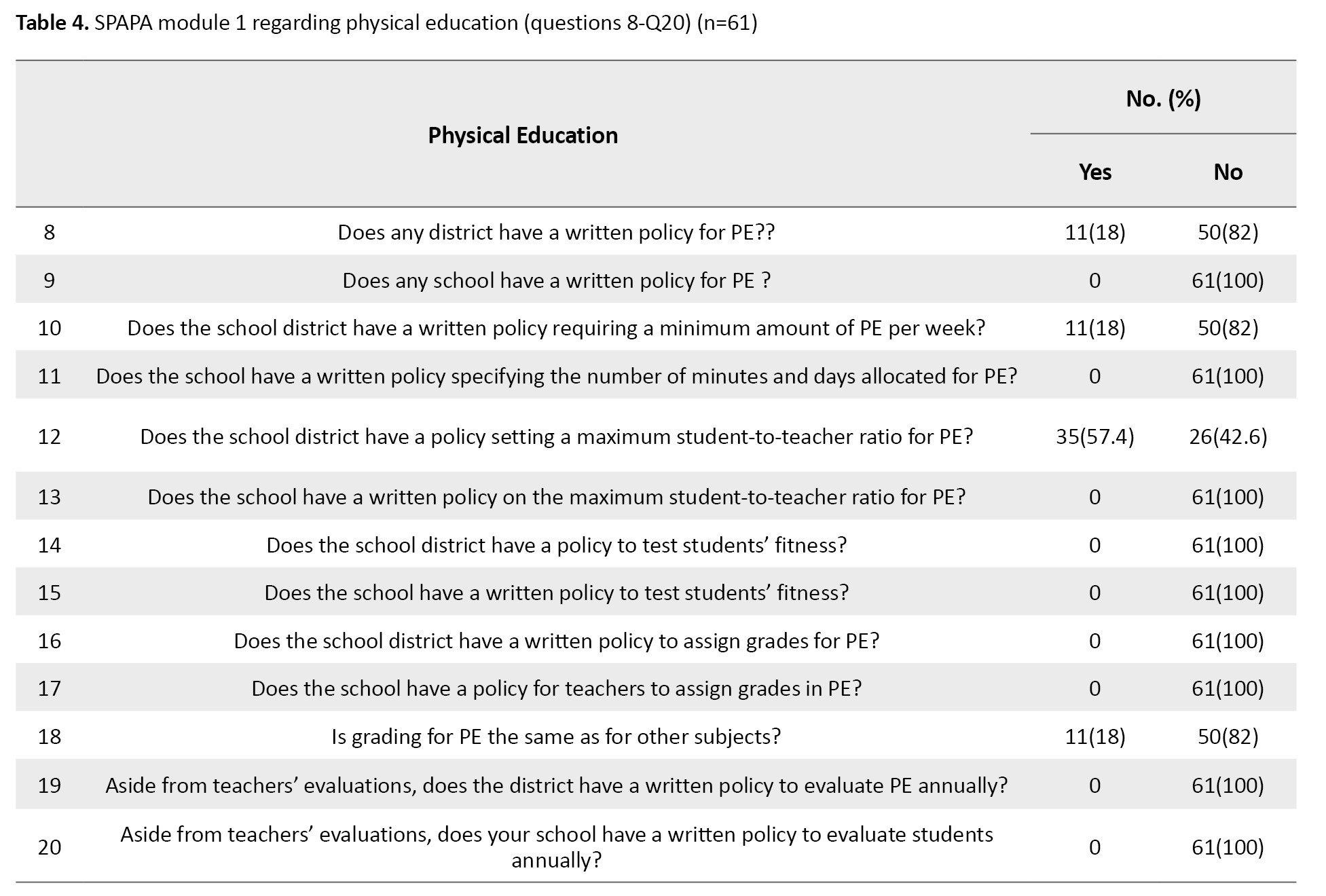
Policy awareness was also discussed by the key informants, teachers, and parents. Most of the participants discussed about policy awareness. Unfortunately, most of them could not differentiate between PA policy and PHE policy. It was obvious that the academic researchers interviewed were the only participants fully aware of the difference between PA and PHE policies. Most parents had no prior knowledge of PHE policy, except one who mentioned that his wife is a teacher, hence he is aware. As indicated, only a few are aware of its existence, as shown in Tables 4, 5, 6, 7 and 8.
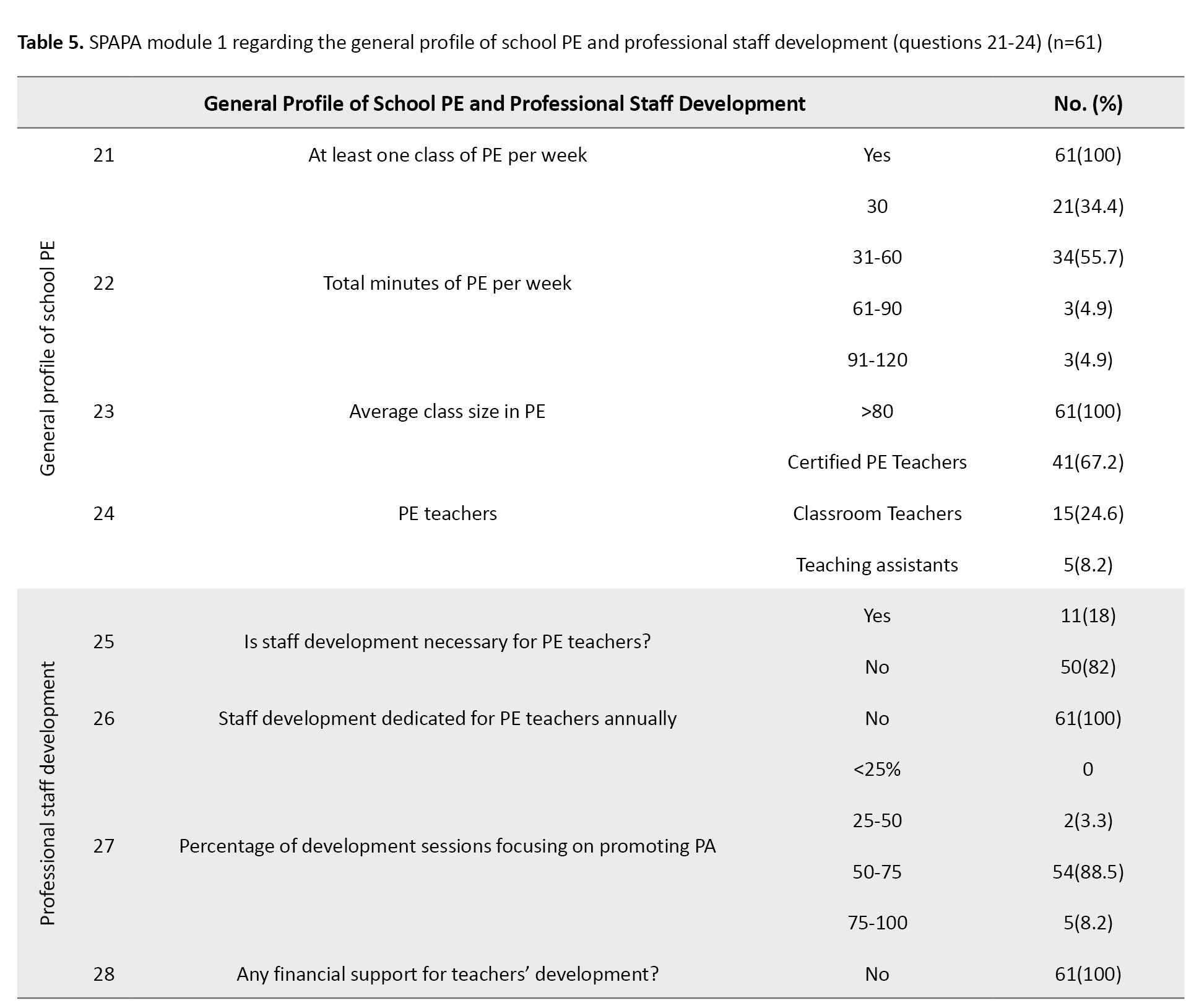

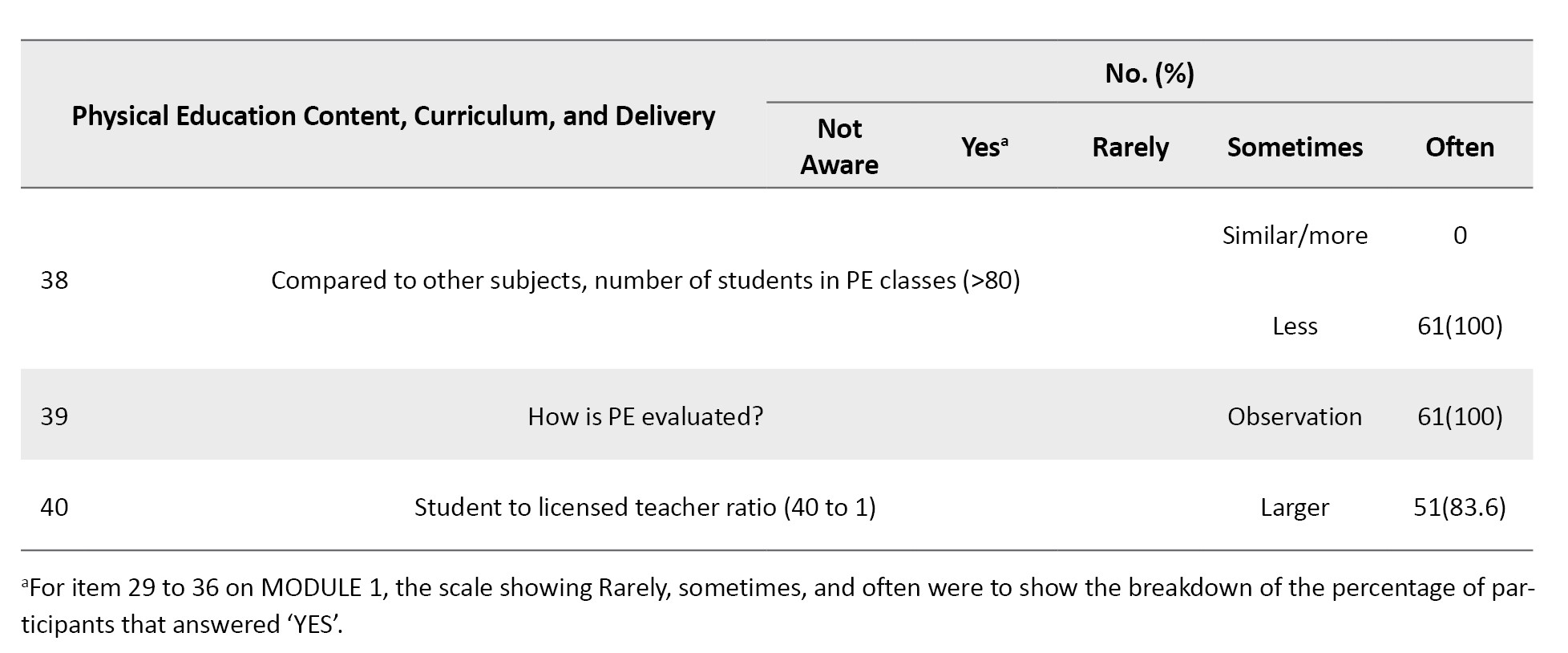
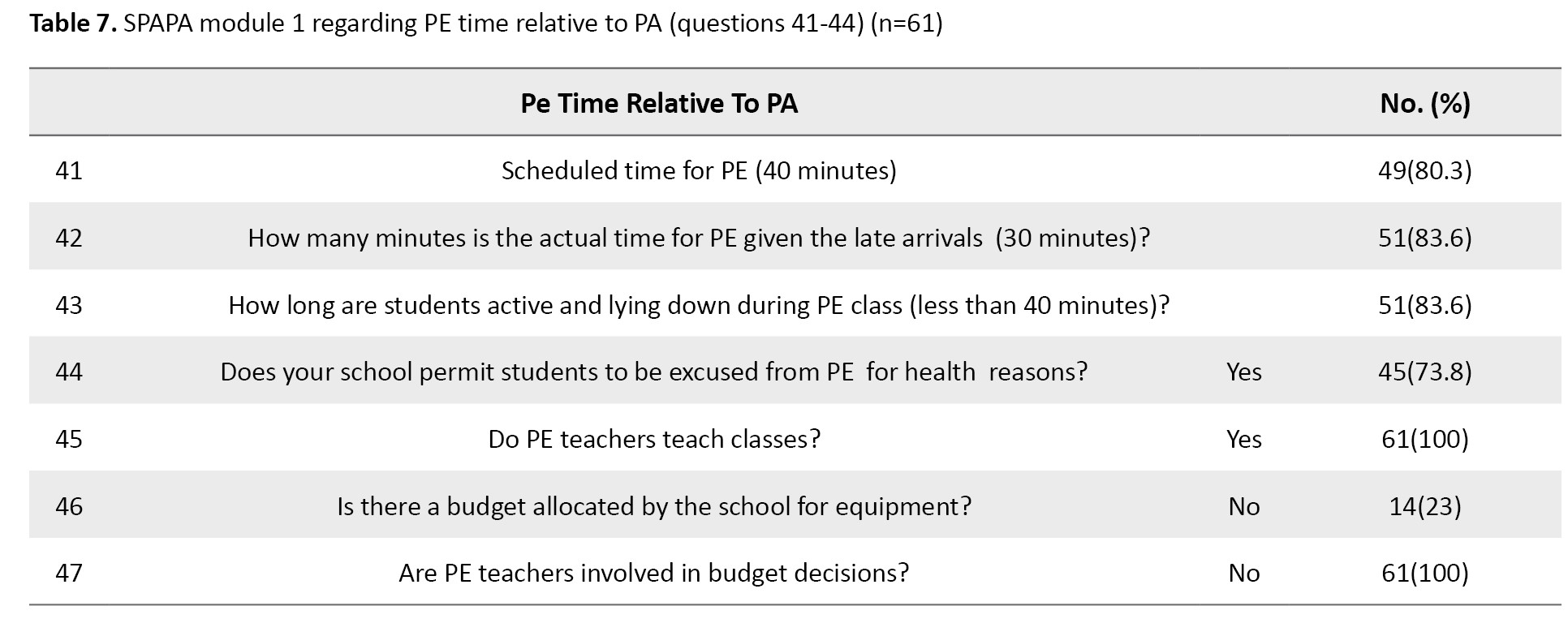
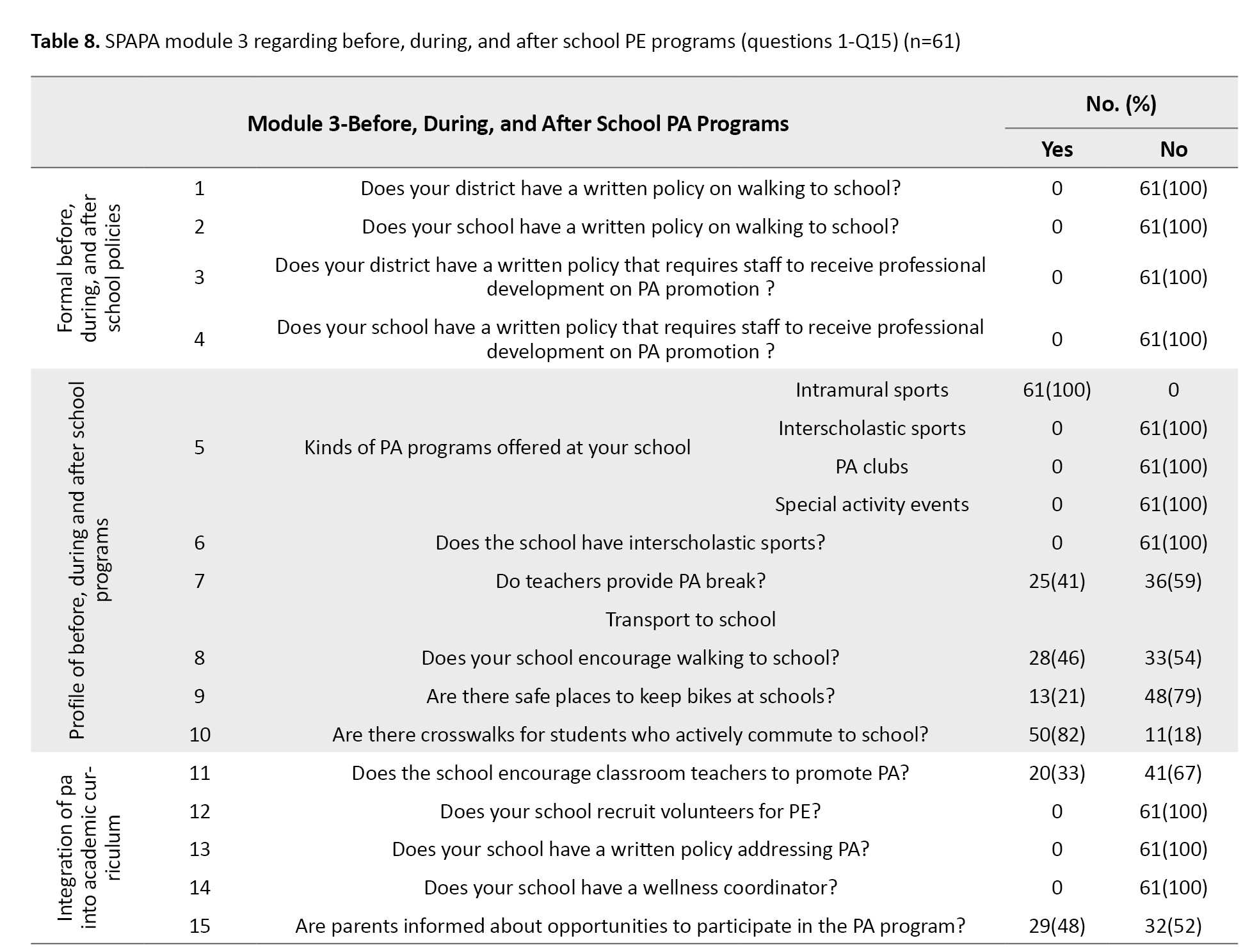
This corroborates the low level of awareness of the PHE policy, as most parents who participated in the FGD had a very limited understanding of the policy in question. The majority of them had no idea what the difference was between PA and PHE policies.
In a study by Vaara et al. on the awareness and knowledge of PA guidelines among young adult men, forty percent of participants reported being aware of the recommendation [43]. Furthermore, only seven percent correctly identified the recommendations for moderate aerobic PA. Those who were unaware of the suggestions had poorer cardiorespiratory and respiratory outcomes, while those who were aware demonstrated better muscle fitness [43].
Unawareness of WHO guidelines was also a major obstacle to policy awareness, as all parents met and the key informants (except the researchers) were unaware of WHO guidelines. Also, their lack of awareness of the non-existence of a PA policy is a major issue, as most stakeholders were not aware (except the academic researchers).
The main informants and teachers also discussed policy implementation. The academic key informants were adamant that the PA policy did not exist. This is due to their extensive understanding of the subject and the fact that they have all worked in the field of research for many years. The teachers expressed their dissatisfaction with the government’s lack of commitment to funding PA-related events and even professional development for PHE teachers. Many teachers polled stated that they had not seen or received any government financial help, and slightly over half of them indicated that they had no access to professional development opportunities. Despite the UBEC allocating 1% of the state’s total budget to promote PA in primary schools across the state, the PHE structure in schools is still inadequate, as the weekly time allocated to teaching and practicing was insufficient (as shown in Table 4). PHE is taught in primary schools, but most schools, particularly private schools, have substituted other subjects for PHE classes, possibly to demonstrate to parents that their children could excel in other subjects, as some parents and even schools regard PHE classes as a waste of time. Another issue discovered to be impacting policy implementation was the length of time provided to PE lessons in schools. Most youngsters now attend school on Thursdays for PE courses, but they do nothing. Teachers confirmed this, stating that most PE lessons are now under 20 minutes rather than the standard 40 minutes.
Notably, all participating public schools had >1000 students each (Table 1), except for private schools which had fewer students. Unfortunately, most of these schools had either one or two PHE teachers for the entire school. These PHE teachers were even attached to specific classes as classroom teachers. This explains why the majority of PE classes now run for less than 20 minutes. This could be due to schools placing less focus on PHE for school pupils. Because of a lack of knowledge of what PE classes do, most schools, particularly private schools, are substituting other subjects for the time allotted for PHE programs. Public school teachers exploit the time allotted for PHE classes to run their own businesses or personal errands. As a result, when students arrive for PHE classes, there is no one to supervise them.
Other identified barriers included a shortage of qualified PHE teachers and inadequate pedestrian infrastructure. This is because the government hires other teachers over PHE teachers. Furthermore, the few remaining PHE teachers are overworked and unable to accomplish much, given that the number of students in each PHE class exceeds the recommended ratio. The government has refused to build enough pedestrian walkways on our roads to encourage kids to walk to and from school. Okoroma outlined fundamental hurdles to policy implementation in Nigeria [44]. Aside from the basic issues of policy execution that affect many countries, especially those in the developing world, some factors are unique to Nigeria and impede progress. This situation is attributed to various factors, including a lack of political will, bureaucratic bottlenecks, government instability—particularly at the state level, corruption among government officials, and a lack of patriotism among public officers [44]. Okoroma further recommended discontinuing the National Policy on Education, which was modeled after the American system, and adopting the approaches used by Asian countries such as Japan, China, and India, which consider the culture of the people [44].
Nigeria’s standing as a worldwide powerhouse, as well as a major oil and gas producer, is no longer news in Africa. Surprisingly, many Nigerians are poor, with a daily income of less than two dollars [45]. Lack of sufficient nutrition is another factor that has been identified as working against policy implementation among primary school pupils, particularly in public schools, where some students have shown stunted growth. An undernourished child will be less active at home and at school.
Teachers’ lack of motivation has also been identified as a barrier to policy implementation, which should be investigated by the relevant labor employers. Many teachers did not remain in their positions long enough to gather valuable expertise. Most parents in the FGD had an educational background below a bachelor’s degree, which could explain their lack of understanding and awareness of PA, SB, and PF.
Fundamentally, a choice or judgment can be considered valid if many stakeholders are included and given ample opportunity to contribute to the decision-making process, resulting in the best possible outcome [46]. A consensus-oriented approach that promotes openness and inclusion increases service providers’ accountability to end users and the public [46]. Furthermore, incorporating a diverse set of stakeholders and different perspectives is likely to boost the likelihood of successful policy creation, implementation, and adherence [46].
Conclusion
Parents in this study demonstrated limited knowledge of PA, SB, and PF. The primary contributors to policy development within the health and education system (excluding academic researchers) are unaware of the WHO guidelines or whether Nigeria is required to adopt a PA policy. The implementation of the existing PHE policy is low and therefore requires strengthening. Since there is no PA policy for children, contrary to WHO recommendations, stakeholders need to collaborate towards the shared goal of developing a PA policy for school learners. Increased financial support for PA-related activities in schools and professional development for teachers should be encouraged. Proper channels of communication should be re-established between policymakers and schools, with limitations placed on bureaucratic bottlenecks. To enhance teacher motivation, incentives for professional development may be considered. At all levels of government, there must be a political will to support the development of infrastructure that facilitates walkways for active mobility, especially for children on roads in both urban and rural areas.
Ethical Considerations
Compliance with ethical guidelines
This study was approved by the Ethics Committee of the University of Kwazulu-Natal, Durban, South Africa (Code: BREC/00000523/2019), and Lagos State University Teaching Hospital, Lagos, Nigeria (Code: LREC/06/10/1331).
Funding
This study was extracted from doctoral dissertation of Olusegun Olatunji Ojedoyin, approved by College of Health Sciences, University of Kwazulu-Natal, Durban, South Africa.
Authors' contributions
Conceptualization, data collection, project administration and supervision: Olusegun Olatunji Ojedoyin, Thayananthee Nadasan and Pragashnie Govender; Formal analysis: Olusegun Olatunji Ojedoyin, Pragashnie Govender, Oladapo Michael Olagbegi; Funding acquisition, review & editing: Thayananthee Nadasan and Pragashnie Govender; Investigation, resources, methodology and writing the original draft: Olusegun Olatunji Ojedoyin; Validation and visualization: All authors.
Conflict of interest
The authors declared no conflict of interest.
Acknowledgments
The authors are grateful to College of Health Sciences, University of Kwazulu-Natal, Durban, South Africa, for the fee remission for the first author.
References
Physical inactivity (PA) is acknowledged as a significant public health issue. Although scheduled vigorous exercise has been previously the main focus, recent years have seen greater emphasis on the concept of ‘active living’, particularly walking. Regular PA, such as moderate-to-vigorous PA (MVPA), has several health benefits, including a lower risk of heart disease and stroke, high blood pressure, diabetes, obesity, depression, and certain cancers, such as breast and colon cancers. In contrast, regular sedentary behaviour (SB) increases the risk of mortality and morbidity from chronic diseases [1]. Moreover, the World Health Organization (WHO) recommends that children aged 5 to 17 years engage in at least 60 minutes of MVPA on at least five days per week and to limit SB in daily life. Walking, running, dancing, swimming, yoga, and gardening are all examples of PA, defined as any bodily movement produced by skeletal muscles that require energy expenditure [2].
The ability to carry out everyday chores with alertness, without undue exhaustion, and with enough energy to enjoy leisure activities and respond to crises is referred to as physical fitness (PF) [3]. PF includes a wide variety of physiological and psychological characteristics that determine one’s ability to engage in physical exercise, such as cardiorespiratory endurance, muscular strength, flexibility, and performance on tests, like the 6-minute walk test and the 50-metre shuttle run. Cardiorespiratory endurance (aerobic power), skeletal muscle endurance, skeletal muscle strength, skeletal muscle power, flexibility, balance, speed of movement, response time, and body composition are some components of PF [3]
Conversely, a highly sedentary lifestyle (e.g. excessive television viewing) negatively affects cardiorespiratory fitness and cognitive skills in children and adolescents [4]. Consequently, a rise in SB can negate the health benefits of the daily dose of PA [4]. Limiting SB whilst maintaining the acceptable MVPA levels in children lowers the risk of cardiovascular disease and cognitive decline [5, 6].
Promoting PA for optimal health
Policy interventions, specifically for health promotion and illness prevention, have long been an essential aspect of the public health approach [7]. Policies can influence PA in a variety of ways. They can improve PA access by changing community design and adding bike lanes or parks. As seen by state legislation governing the quantity and quality of physical education, they have the authority to regulate [7].
Actors in the promotion of PA for optimal health
Parents and other stakeholders, like teachers, politicians, and public servants related to education and health are prominent actors in promoting PA for optimal health among school children [8]. The involvement of parents has an impact on a child’s education. This engagement is important for a child’s development and growth, since these can be done through close monitoring and, in some cases, by assisting the child with their schoolwork and attendance at school-based activities (parent meetings and education seminars) [9]. Parents’ involvement in their children’s PA can enhance the child’s chances of success and provide motivation for continued participation. Children with involved parents are energetic and ready to study; they learn to be punctual from a young age and to be persistent [10]. When parents demonstrate initiative in their child’s developmental trajectory, the child is motivated to succeed and to gain the approval and acceptance of their parents, and as they organize and perform their tasks according to a schedule, these children develop a sense of responsibility [11]. When strong collaboration exists between parents and school authorities, it can lead to improved outcomes in both physical and academic performance [11].
Multiple stakeholders (including teachers, policymakers, parents, school boards, and researchers involved in PA-related work) play essential roles in implementing and adhering to PA guidelines, as well as promoting knowledge and awareness of PA, PF, and SB. Veronesi and Keasey and also Stoker introduced the concept of democratic legitimacy, which positions stakeholders at the centre of the decision-making process [8, 12]. In this approach, a wide range of stakeholders are engaged and provided with meaningful opportunities to participate, thereby maximising the quality of the decisions made. A decision is considered more valid when multiple stakeholders are included and given sufficient opportunity to contribute, ultimately leading to the most favourable outcomes [13, 14]. This consensus-orientated model promotes openness and inclusion, strengthening the accountability of service providers to end users and the broader public [15]. Moreover, incorporating diverse stakeholders and perspectives increases the likelihood of successful policy development, implementation, and long-term adherence [16].
All parents, teachers, policymakers, and members of the public who have a vested interest in the functioning and outcomes of an educational system are collectively referred to as educational stakeholders [17]. It is well established that the provision of education is a shared responsibility among these stakeholders, who can significantly influence educational quality by emphasising the importance of effectiveness within the system. For example, stakeholders can shape the efficiency of quality-improvement processes and enhance the overall quality of decision-making. In doing so, they contribute to stronger policy implementation and adherence, ultimately improving the educational system as a whole [16, 17]. In 2012, the first global attempt to monitor countries’ implementation of PA policy began [18]. The international society of PA and health (ISPAH) developed the global observatory for PA (GOPA) to track global progress in the areas of surveillance, policy, and research. GOPA is the world’s first observatory dedicated solely to tracking and reporting health, surveillance, policy, and research indicators connected to PA. GOPA collected data for 217 countries within its first two years of existence. GOPA aimed to collaborate with a range of organisations and individuals to monitor PA using population-based public health tools and to promote increased participation in PA [19]. Governments around the world are striving to meet the WHO’s PA targets, which call for a 10% increase in global PA levels by 2025 [18]. However, in Lagos, Nigeria, PA policies have yet to be fully implemented or adhered to. Furthermore, limited information exists regarding the knowledge and awareness of key stakeholders concerning PA, SB, and PF, particularly the parents. Lagos State is located in the southwestern region of Nigeria and is one of the 36 states that make up the Nigerian federation. It is the country’s major commercial hub and has an estimated population of about 21 million people, representing roughly 10% of Nigeria’s total population of 215 million [20].
Finding out about stakeholders’ (teachers, parents, policymakers, politicians, and researchers) knowledge and awareness of PA, SB, and PF, as well as the implementation and adherence of PA policy among school learners in Lagos, would help the WHO meet its PA target of at least a 10% increase in PA for all by 2025. Therefore, the aim of this study was to examine stakeholders’ knowledge and awareness of PA, SB, and PF, as well as PA policy implementation and adherence among primary school learners in Lagos, Nigeria.
Materials and Methods
Study design
This concurrent mixed-methods study, conducted in Lagos, Nigeria, included three stages, including a survey administration for teachers on school PA policy, focus group discussions (FGD) with parents of primary school learners, and key informant in-depth individual interviews (IDI) with multiple stakeholders. Phases of the study: The study methods are described within each of the phases below.
Phase 1: Adapted school PA policy assessment (S-PAPA) [22]
Participant recruitment and sampling: Participants were recruited through face-to-face meetings. The target population included headteachers and physical and health education teachers (PHE). Sixty-one head teachers and PHE teachers (out of 80 invited) from 40 private and 40 public primary schools were recruited.
Data collection instrument: An adapted version of the S-PAPA was used. The S-PAPA was designed to measure school policy and environmental variables to the quantity and quality of children’s PA at school [21]. It comprises three sections: i) physical education (47 items), ii) recess (27 items), and iii) other before, during, and after school programmes (15 items). Only sections I and III were included in this study. The adapted S-PAPA was previously utilized in a study in Ibadan, Nigerian by Oluwasanu et al. [22], and found to be adaptable to Nigerian environment. Data analysis: Data were captured onto an Excel spreadsheet and analyzed using descriptive statistics.
Phase 2: FGD with parents of primary school children
Participant recruitment and sampling: Parents were recruited via telephone calls and face-to-face meetings. Parents of children in any grade, aged between six and 12 years were recruited. Twenty-seven parents (10 in Group A, 10 in Group B, and 7 in Group C) agreed to participate.
Data collection: The FGDs were organized in a community town hall in Gberigbe, Ikorodu, Lagos. There were three groups, namely A (n=10), B (n=10) and C (n=7). A focus group schedule was developed with open-ended questions to explore the parents’ understanding and awareness of PF, PA and SB. The FGDs were audio-recorded, with 79 minutes of audio available for manual transcription.
Data analysis: The audio recordings were transcribed, and were reduced to codes and categories, and pooled to themes using thematic analysis with an inductive-deductive approach [23]. The method of analysis employed the data-driven inductive approach of Boyatzis [24], along with the deductive a priori template of codes approach outlined by Crabtree [25].
Phase 3: Key informant individual in-depth interviews (KII)
Participant recruitment and sampling: Key informants were recruited through official requests and via prior approval from relevant gatekeepers. Purposive sampling was used to recruit key informants (n=6) involved in policy development, namely directors in the ministries of education, health, and education parastatal, and academic researchers working and researching in the field with co-authored articles on PA.
Data collection: Three of the interviews were conducted face-to-face and three were via virtual interview on the Zoom® Platform, due to the COVID-19 pandemic and subsequent restrictions. Interviews were audio-recorded with a total of 232 minutes of audio available for manual transcription. Data analysis: The process of data analysis occurred as for stage 2.
Quality inference (reliability, validity, and trustworthiness)
Phase 1: Test-re-test results suggest S-PAPA items as reliable and useful in assessing PA policies in elementary schools [21]. Selected physical education items, as well as items related to the before, during, and after school programs, were found to be significant—83% (kappa=0.72) and 93% (kappa=0.79), respectively [21]. The instrument was also found to have content and construct validity. The three distinct modules provide researchers with the flexibility to assess one or all aspects of school PA programming and related policies.
Phases 2 and 3: The credibility of the study was enhanced by using purposive sampling, recruiting participants with experience as headteachers, PHE teachers, parents of children aged six to 12 years, and stakeholders directly involved in policy formulation and implementation at basic schools. Moreover, the lead coder used peer debriefing throughout the analysis to establish further credibility and improve reliability of the study. An explanation of data gathering and analysis process is reported to ensure dependability. Triangulation of data via three sources adds to the rigour of the study [26]. Transferability is maintained by including a detailed description of the participants and the study environment [27].
Ethical clearance and considerations
Gatekeeper permission was granted by the Office of the Head of Service, Lagos State Government. Phase one of the project was conducted in accordance with the Declaration of Helsinki [28], ensuring confidentiality by de-identifying all data extracted from headteachers and PHE [29]. In phases two and three, all participants provided informed consent, and pseudonyms were used in reporting the findings.
Results
The demographic profile of participants is indicated together with the results of SPAPA module 1 and module 3.
Participants’ characteristics
Tables 1, 2 and 3 present the participants’ characteristics in the three stages of this study.
Emergent themes: Three emerging themes, along with their corresponding subthemes, are presented in Figure 1 and described in detail, and are supplemented with verbatim quotes in the following narrative.
Theme 1: Knowledge, awareness, and perceptions of PA, PF, and SB
Defining and describing PA: PA was defined and described in a variety of ways by the participants. Most participants showed partial understanding of PA, with some describing it in terms of psychomotor and cognitive learning domains.
“PA has been broadly defined as basically any movement of the skeletal contractile muscles that results in substantial energy expenditure. This construct includes a continuum of intensity (PM6, KII). … (PM6, KII)”.
“PA would include any form of activation of the muscles to expend energy, and any activity that involves muscular contraction, you know, to carry out any muscular contraction required to perform movement is literally defined as PA” (PM4, KII).
“PA is the ability to manage or transmit your mental alertness into physical activities, like exercising your body, you need a mental alertness; you need to be alert mentally before you can embark on any PA. It involves mental action; it starts from the brain (P7, FGD).”
“I think PA is first and foremost about mental alertness, to start PA you have to be mentally stable. If you are not physically or mentally strong or stable, you cannot perform well in PA” (P4, FGD).
Key informants classified PA as low, moderate, or vigorous, distinguishing amongst daily activities to describe the various levels.
“If you are talking about the pattern of physical behaviour, what comes to mind here is the type of activity that the person is doing and how they are doing it. Is it exercise? Is it walking? Is it light intensity, is it moderate intensity, or is it vigorous activity? How many of the children are doing light-intensity PA? How many of them are doing moderate-intensity PA? How many of them are doing vigorous-intensity PA? Also, how many of them are walking to school? That is active transportation. Also, how many of them are actually doing leisure recreational activity that is sport exercise?” ”(PM6, KII).
Another key informant referred to the pattern of PA, referring to how one generally engages in activities and the timing of such.
“For the pattern, it is wide. By ‘pattern’, they generally meant the type and timing of activity (e.g. only walking, only swimming, or morning-only sessions). The pattern, you know, includes all those who follow those routines based on how they prefer to engage in them, and we also discuss when they want to do it; some will tell you that they only do it in the morning (PM4, KII).”
Nutrition and its link to PA: Some of the key informants suggested that for a child to engage in proper and adequate PA, there must be adequate nutrition. Participants expressed that both leanness and obesity should be considered factors affecting PA.
“Yes, obesity is common—common in our time—but I don’t want us to become too focused on obesity and overlook leanness. It is also very common in our time. Attention has been going to obesity; we are forgetting that there are children who are starving and getting malnourished, which is a metabolic issue” (PM4).
“They may even die before the person who is obese or may not be able to participate in PA” (PM5).
Benefits of PA: Most participants were able to demonstrate their knowledge and awareness of PA by mentioning the benefits associated with / obtained from engaging in PA. Benefits mentioned included increasing mental and physical well-being and lowering mortality from non-communicable chronic diseases.
“Yes, there is a strong positive correlation between PA and pupils’ mental and physical well-being (PM3, KII).”
“WHO evidence has shown that ≥150 minutes/week of MVPA (or ≥75 minutes of vigorous intensity) for adults and at least 300 minutes for children has effects on all-cause mortality by reducing the incidence of death. It also has effects on all costs and mortality from specific diseases, for example, cancer, diabetes, and other NCDs. So, there is strong evidence that the international consensus emphasizes focusing more on the evidence that is quantitative in terms of intensity and duration rather than just on steps per day (PM6, KII).”
Defining and Describing PF: The parents did not understand PF; however, only two academic researchers could accurately define PF; parents lacked understanding. . One of the key informants referred to PF as being linked to PA.
“So, in terms of PF, individuals who are physically active are expected to achieve PF, so PF is an expected result of PA, and the two are linked. Physical inactivity and SB are nearly the same, yet their definitions differ, even though both are linked to PF. The end output that we seek from these two notions is PF (PM6, KII)”.
Another key informant indicated that PF is the ability of an individual to carry out his daily routines without undue cardiovascular or muscular pressure.
Fitness typically refers to the ability to perform daily tasks comfortably, with energy to spare. I mean, that’s when we try to distinguish between people who get tired easily from minor physical exertions and those who can go through or endure longer periods of activity. So, the conventional understanding is that someone who is labelled as healthy or physically fit is someone who can carry out his daily routines comfortably, since the basis of what we do is for people to be able to do so. As a result, those who can go about their daily routines and expend energy are desirable” (PM4, KII).
Defining and describing SB: Key informants were able to demonstrate their knowledge of SB by various definitions and extended descriptions by differentiating between physical inactivity and SB with relevant examples.
“While I’m sitting down right now, that doesn’t imply that I’m sedentary; but I become sedentary when this is what I do for a lengthy period, perhaps 2 weeks or more, or when my job requires not getting up and not moving, and that is sedentary. We all engage in sedentary activities throughout our lives, but we are not all sedentary individuals” (PM5, KII).
One participant referred to SB as any activity when one is lying or sitting down.
“SB itself is basically any activity that is done when a person is lying down or sitting down or reclining with energy expenditure ≤1.5 METs” (PM6, KII).
Another participant referred to SB as a period of inactivity.
“Sedentariness essentially has to do with a period of inactivity, you know, where people have not been engaged in any activity that is going to place a lot of demand on the muscular system. Now, with SB, it’s not necessarily from the word; it is not necessarily when someone is only seated. I mean, SB also encompasses any non- active kind of activity, any activity that doesn’t have so much task for the muscles. So, when you sit, I want to describe people who are seated throughout the day or those who sit for a longer period of time, or those who are generally inactive regardless of posture ; they would be categorized as those living a sedentary life” (PM4, KII).
Theme 2: Policy awareness
Lack of PA and PHE policy awareness: Only 18% of the teachers were aware of the existence of the PHE policy. Also, 96.7% of the teachers indicated no PA policy or policy on walking or biking to school. Most of the key informants spoke about policy awareness; however, the majority were unable to differentiate between PA and PHE policies, except for the academic researchers who were aware of the difference between PA and PHE policies and the lack of a PA policy in the country.
“The National policy on education already supports PHE; a separate PA policy is unnecessary. Then we have the national curriculum at schools embedded in our subjects in the schools and ensure where we have a policy in existence, except that you want to have another policy on this. If you want to have it, fine, but I don’t think there is any need to have a separate policy on PA. But what we should do is to ensure that what we have, that is, an existing policy on education, is followed strictly (PM2, KII).
There is limited expertise to guide the development and implementation of PA guidelines for Nigerian children and a lack of commitment among researchers to complete this route—and the other thing is lack of political will on the part of policymakers, or the government to see PA as a priority, as the priority in Nigeria” (PM6, KII).
“Most people, including myself, are unaware of any specific PA policy because none exists. There is a policy on physical education, but that’s different from a policy on PA. It will only take our own experience to be able to understand that physical education would, if properly implemented, take care of PA needs of the children. So, if you go around asking about policy on PA, no, the answer is no” (PM4, KII).
The PHE and PA policies were unknown to the parents except for one who indicated being aware of a guideline at school.
“Yes, there’s a guideline at school…(Giggles). My wife works with the teaching lessons, and she has a curriculum, and I sometimes go through it” (PC7, FGD).
Lack of awareness of WHO guideline: When probed, parents and key informants were unaware of the guidelines, except for the academic researchers who were conversant with the WHO guidelines.
Well, I’m not quite aware of that, but what I can tell you is that we have a department in our school that deals with physical activities in our school (PM3, KII). I am not aware of any WHO guideline (PM1, KII)
Theme 3: Policy implementation
Financial and professional support
Teachers and key informants provided conflicting reports regarding financial and professional support. Also, 90.2% (n=55) of teachers were either unaware of or reported receiving no financial support or indicated no financial assistance from the government for PE promotion. In addition, 85.2% (n=52) confirmed that they had no access to any known form of professional development. A key informant, however, indicated that the government earmarked a budget for the promotion of PA in primary schools.
“I must let you know that the universal basic education commission (UBEC), which oversees basic education at the national level, has earmarked 1% of the intervention fund that goes to states to take care of physical activities, sporting, and all other physical activities” (PM3, KII).
Reduced duration and poor scheduling of PE classes: The duration of PE classes in schools may be a contributing factor to effective policy implementation. Also, 51% reported PE classes lasting <20 minutes (instead of the standard 40 minutes) and 56% of them indicated the total number of PE classes in a week is between 31and 60 minutes instead of 120 minutes. A key informant indicated that most children going to school on the day of their PE classes are not actually actively engaged in PE.
“But when they are going out, they put on sportswear, they go straight to the class and sit down. They don’t do any PE classes; I have children among them. They wear sportswear and when they come back, you ask, “How was the sport?” They say we didn’t do anything, but we put on sportswear, so that is what we see; it is pathetic. The public school where we used to have PHE” (PM5, KII).
Lack of PHE teachers affecting policy adherence: The lack of adequate PHE teachers was identified as one barrier to policy adherence, as there are not enough teachers to implement the policy.
“So, they spend more time teaching than time on physical activities, combined with the fact that they don’t even have opportunities to do so, they don’t have teachers who are trained to do so, so there are a lot of issues in our schools...and that has really impacted our children” (PM4, KII).
Lack of motivation of PHE teachers: The lack of motivation on the part of the PHE teachers was found to be a likely contributor to policy implementation. Poor renumeration and lack of incentives were highlighted as being significant obstacles.
“Remuneration for public school PHE teachers is very low . So, because of this, they use the same time they have for other businesses; some use PE time to sell clothes and shoes. That is the time they go about their personal businesses” (PM5, KII).
Lack of safe infrastructure as a barrier to policy implementation: The lack of sidewalk ways was mentioned as limiting full policy implementation. One of the participants said he could not allow his children to walk to and from their schools due to safety.
“My children’s school is only a 10-minute walk away, but I cannot let them walk because of safety concerns . I know they walk when they leave school to cross the street.’ I’m not sure whose safety I’m putting my kids in when they leave school and return home. I can’t, so I’ll have to go get them or ask someone else to get them, even though the distance between the school and home is less than 10 minutes, do you understand?( KII, PM5)”
Discussion
This is the first known multi-stakeholder study in Nigeria examining multiple stakeholders’ knowledge and awareness of PA, PF and SB, and the implementation and adherence to PA guidelines for primary school learners in Lagos, Nigeria. Most of the stakeholders provided varying definitions of PA. They defined PA as any movement of the skeletal contractile muscles that results in a significant amount of energy expenditure. This indicates that most participants have a basic understanding of PA. PA is defined as “any bodily movement produced by skeletal muscle that necessitates energy expenditure [29]. This is the most frequently accepted definition of PA, published by Ainsworth et al. to contextualize the status quo surrounding definitions of PA [3, 30]. Within the research community, this definition is frequently used and accepted in a variety of health-related situations. Even major health policies around the world use the same definition [31, 32].
PA can be done in a variety of ways, while certain activities are done voluntarily and can be enjoyable, others, such as work or domestic-related physical activities, may be necessary, if not mandatory. PA is classified in several ways. It can be segmented based on a variety of factors. The simplest categorisation identifies the PA that occurs while sleeping, at work, and at leisure [33]. PA was divided into three categories: low, moderate, and vigorous. This classification was adopted by the WHO in all its PA guidelines for children, adults, and the elderly [34]. However, if done regularly and for a sufficient duration and intensity, all forms of PA can be beneficial to a person’s health.
The stakeholders interviewed also indicated the benefits of PA. Most of them agreed that PA is very beneficial to humans both physiologically and psychologically. In a review of the health benefits of PA in school-aged children and youth by Janssen et al. [35], PA was associated with numerous health benefits. The dose-response relations observed in observational studies indicate that the more PA, the greater the health benefit. Results from experimental studies indicate that even modest amounts of PA can have health benefits in high-risk youngsters (e.g. obese ones). To achieve substantive health benefits, the PA should be of at least a moderate intensity. Vigorous intensity activities may provide even greater benefit. Aerobic activities had the greatest health benefits, except for bone health, which required high-intensity weight-bearing activities. Regular PA is proven to help prevent and treat noncommunicable diseases (NCDs), such as heart disease, stroke, diabetes, and breast and colon cancer [35]. It also helps to prevent hypertension, overweight, and obesity and can improve mental health, quality of life, and well-being [35, 36].
Only the academic researchers provided accurate definitions of SB. SB can be defined as any activity performed while a person is lying down, sitting, or reclining. Although several definitions exist in the literature, the most widely accepted is a behavior with a metabolic equivalent (MET) value of 1.0 to 1.5, which corresponds to sitting or lying down [37]. It is a group of behavior characterized by low energy consumption. SB refers to activities that require very little energy and are carried out mostly in a sitting or supine position [37]; Sedentary activities are ones that need only a small amount of energy [38].
In a review of literature on SB by Park et al. they suggested that because of a shortage of appropriate locations for exercise, increased occupational sedentary habits, such as office employment, and greater penetration of television and video devices, inactive lifestyles are growing worldwide [39]. As a result, the associated health issues are on the rise. SB has a variety of effects on the human body. Lipoprotein lipase activity, muscle glucose, and protein transporter activity are all reduced by SB [39]. Activities like, lipid metabolism and carbohydrate metabolism are damaged [39]. Furthermore, by activating the sympathetic nervous system and decreasing cardiac output and systemic blood flow, it reduces insulin sensitivity and vascular function [39]. It also affects the insulin-like growth factor axis and the levels of sex hormones in circulation. Hormone-related malignancies are more common because of this. Increased all-cause mortality, cardiovascular disease mortality, cancer risk, and risks of metabolic disorders, such as diabetes mellitus, hypertension, and dyslipidemia, musculoskeletal disorders, such as arthralgia and osteoporosis, depression, and cognitive impairment are all consequences of SB [39]. Sedentary lifestyles are linked to metabolic problems, including increased plasma triglycerides and high-density lipoprotein (HDL) cholesterol [40], as well as decreased insulin sensitivity. It is well known that high concentrations lower HDL cholesterol levels in the blood [40]. As a result, both lowering SB and increasing physical exercise are critical for public health.
The interviewed stakeholders (primarily academic researchers) defined PF as a broad construct that involves two domains: The health-related domain and the physical performance domain, which is the construct that discuss about how well a person will benefit from being physically active. The health-related physical performance construct includes PF, body composition, and flexibility. This was well defined by the academic stakeholders interviewed, and most of the other participants interviewed could not provide detail on a proper definition.
PF is defined in contrast to PA, as “the ability to carry out daily tasks with vigour and alertness, without undue fatigue and with ample energy to enjoy leisure time pursuits and to meet unforeseen emergencies”[41]. The most frequently mentioned components fall into two categories: One connected to health, and the other, talents that are more athletic in nature. The health-related components of PF are (a) cardiorespiratory endurance, (b) muscular endurance, (c) muscular strength, (d) body composition, and (e) flexibility [41]. A study by Ortega and colleagues on PF in childhood and adolescence found that improvements in cardiorespiratory fitness had positive impacts on anxiety, mental status, and self-esteem [42]. They also appear to relate to greater academic achievement.
Policy awareness was also discussed by the key informants, teachers, and parents. Most of the participants discussed about policy awareness. Unfortunately, most of them could not differentiate between PA policy and PHE policy. It was obvious that the academic researchers interviewed were the only participants fully aware of the difference between PA and PHE policies. Most parents had no prior knowledge of PHE policy, except one who mentioned that his wife is a teacher, hence he is aware. As indicated, only a few are aware of its existence, as shown in Tables 4, 5, 6, 7 and 8.
This corroborates the low level of awareness of the PHE policy, as most parents who participated in the FGD had a very limited understanding of the policy in question. The majority of them had no idea what the difference was between PA and PHE policies.
In a study by Vaara et al. on the awareness and knowledge of PA guidelines among young adult men, forty percent of participants reported being aware of the recommendation [43]. Furthermore, only seven percent correctly identified the recommendations for moderate aerobic PA. Those who were unaware of the suggestions had poorer cardiorespiratory and respiratory outcomes, while those who were aware demonstrated better muscle fitness [43].
Unawareness of WHO guidelines was also a major obstacle to policy awareness, as all parents met and the key informants (except the researchers) were unaware of WHO guidelines. Also, their lack of awareness of the non-existence of a PA policy is a major issue, as most stakeholders were not aware (except the academic researchers).
The main informants and teachers also discussed policy implementation. The academic key informants were adamant that the PA policy did not exist. This is due to their extensive understanding of the subject and the fact that they have all worked in the field of research for many years. The teachers expressed their dissatisfaction with the government’s lack of commitment to funding PA-related events and even professional development for PHE teachers. Many teachers polled stated that they had not seen or received any government financial help, and slightly over half of them indicated that they had no access to professional development opportunities. Despite the UBEC allocating 1% of the state’s total budget to promote PA in primary schools across the state, the PHE structure in schools is still inadequate, as the weekly time allocated to teaching and practicing was insufficient (as shown in Table 4). PHE is taught in primary schools, but most schools, particularly private schools, have substituted other subjects for PHE classes, possibly to demonstrate to parents that their children could excel in other subjects, as some parents and even schools regard PHE classes as a waste of time. Another issue discovered to be impacting policy implementation was the length of time provided to PE lessons in schools. Most youngsters now attend school on Thursdays for PE courses, but they do nothing. Teachers confirmed this, stating that most PE lessons are now under 20 minutes rather than the standard 40 minutes.
Notably, all participating public schools had >1000 students each (Table 1), except for private schools which had fewer students. Unfortunately, most of these schools had either one or two PHE teachers for the entire school. These PHE teachers were even attached to specific classes as classroom teachers. This explains why the majority of PE classes now run for less than 20 minutes. This could be due to schools placing less focus on PHE for school pupils. Because of a lack of knowledge of what PE classes do, most schools, particularly private schools, are substituting other subjects for the time allotted for PHE programs. Public school teachers exploit the time allotted for PHE classes to run their own businesses or personal errands. As a result, when students arrive for PHE classes, there is no one to supervise them.
Other identified barriers included a shortage of qualified PHE teachers and inadequate pedestrian infrastructure. This is because the government hires other teachers over PHE teachers. Furthermore, the few remaining PHE teachers are overworked and unable to accomplish much, given that the number of students in each PHE class exceeds the recommended ratio. The government has refused to build enough pedestrian walkways on our roads to encourage kids to walk to and from school. Okoroma outlined fundamental hurdles to policy implementation in Nigeria [44]. Aside from the basic issues of policy execution that affect many countries, especially those in the developing world, some factors are unique to Nigeria and impede progress. This situation is attributed to various factors, including a lack of political will, bureaucratic bottlenecks, government instability—particularly at the state level, corruption among government officials, and a lack of patriotism among public officers [44]. Okoroma further recommended discontinuing the National Policy on Education, which was modeled after the American system, and adopting the approaches used by Asian countries such as Japan, China, and India, which consider the culture of the people [44].
Nigeria’s standing as a worldwide powerhouse, as well as a major oil and gas producer, is no longer news in Africa. Surprisingly, many Nigerians are poor, with a daily income of less than two dollars [45]. Lack of sufficient nutrition is another factor that has been identified as working against policy implementation among primary school pupils, particularly in public schools, where some students have shown stunted growth. An undernourished child will be less active at home and at school.
Teachers’ lack of motivation has also been identified as a barrier to policy implementation, which should be investigated by the relevant labor employers. Many teachers did not remain in their positions long enough to gather valuable expertise. Most parents in the FGD had an educational background below a bachelor’s degree, which could explain their lack of understanding and awareness of PA, SB, and PF.
Fundamentally, a choice or judgment can be considered valid if many stakeholders are included and given ample opportunity to contribute to the decision-making process, resulting in the best possible outcome [46]. A consensus-oriented approach that promotes openness and inclusion increases service providers’ accountability to end users and the public [46]. Furthermore, incorporating a diverse set of stakeholders and different perspectives is likely to boost the likelihood of successful policy creation, implementation, and adherence [46].
Conclusion
Parents in this study demonstrated limited knowledge of PA, SB, and PF. The primary contributors to policy development within the health and education system (excluding academic researchers) are unaware of the WHO guidelines or whether Nigeria is required to adopt a PA policy. The implementation of the existing PHE policy is low and therefore requires strengthening. Since there is no PA policy for children, contrary to WHO recommendations, stakeholders need to collaborate towards the shared goal of developing a PA policy for school learners. Increased financial support for PA-related activities in schools and professional development for teachers should be encouraged. Proper channels of communication should be re-established between policymakers and schools, with limitations placed on bureaucratic bottlenecks. To enhance teacher motivation, incentives for professional development may be considered. At all levels of government, there must be a political will to support the development of infrastructure that facilitates walkways for active mobility, especially for children on roads in both urban and rural areas.
Ethical Considerations
Compliance with ethical guidelines
This study was approved by the Ethics Committee of the University of Kwazulu-Natal, Durban, South Africa (Code: BREC/00000523/2019), and Lagos State University Teaching Hospital, Lagos, Nigeria (Code: LREC/06/10/1331).
Funding
This study was extracted from doctoral dissertation of Olusegun Olatunji Ojedoyin, approved by College of Health Sciences, University of Kwazulu-Natal, Durban, South Africa.
Authors' contributions
Conceptualization, data collection, project administration and supervision: Olusegun Olatunji Ojedoyin, Thayananthee Nadasan and Pragashnie Govender; Formal analysis: Olusegun Olatunji Ojedoyin, Pragashnie Govender, Oladapo Michael Olagbegi; Funding acquisition, review & editing: Thayananthee Nadasan and Pragashnie Govender; Investigation, resources, methodology and writing the original draft: Olusegun Olatunji Ojedoyin; Validation and visualization: All authors.
Conflict of interest
The authors declared no conflict of interest.
Acknowledgments
The authors are grateful to College of Health Sciences, University of Kwazulu-Natal, Durban, South Africa, for the fee remission for the first author.
References
- Chaput JP, Willumsen J, Bull F, Chou R, Ekelund U, Firth J, et al. 2020 WHO guidelines on physical activity and sedentary behaviour for children and adolescents aged 5-17 years: Summary of the evidence. Int J Behav Nutr Phys Act. 2020; 17(1):141. [DOI:10.1186/s12966-020-01037-z.] [PMID]
- World Health Organization (WHO). Global action plan on physical activity 2018-2030: More active people for a healthier world. Geneva: World Health Organization; 2018. [Link]
- Siscovick DS, Laporte RE, Newman J, Iverson DC, Fielding JE. Physical activity, exercise, and physical fitness: Definitions and distinctions for health-related research synopsis. Public Health Rep. 1985; 100. [Link]
- Carson V, Hunter S, Kuzik N, Gray CE, Poitras VJ, Chaput JP, et al. Systematic review of sedentary behaviour and health indicators in school-aged children and youth: An update. Appl Physiol Nutr Metab. 2016; 41(6 Suppl 3):S240-65. [DOI:10.1139/apnm-2015-0630] [PMID]
- Tremblay MS, Aubert S, Barnes JD, Saunders TJ, Carson V, Latimer-Cheung AE, Chastin SFM, et al. Sedentary behavior research network (SBRN) - Terminology consensus project process and outcome. Int J Behav Nutr Phys Act. 2017; 14(1):75. [DOI:10.1186/s12966-017-0525-8] [PMID]
- Ding D, Kolbe-Alexander T, Nguyen B, Katzmarzyk PT, Pratt M, Lawson KD. The economic burden of physical inactivity: A systematic review and critical appraisal. Br J Sports Med. 2017; 51(19):1392-409. [DOI:10.1136/bjsports-2016-097385] [PMID]
- Schmid TL, Pratt M, Howze E. Policy as intervention: environmental and policy approaches to the prevention of cardiovascular disease. Am J Public Health. 1995; 85(9):1207-11. [DOI:10.2105/AJPH.85.9.1207] [PMID]
- Veronesi G, Keasey K. Policy implementation and stakeholder involvement within the National Health Service. J Public Adm Res Theory. 2009; 18:543-71. [Link]
- Liu Y, Sulaimani MF, Henning JE. The significance of parental involvement in the development in infancy. J Educ Re Pract. 2020; 10(1):161–6. [DOI:10.5590/jerap.2020.10.1.11]
- Lindberg E, Güven P. The Impact of Parental Involvement and Expectations on Elementary School Students’ Academic Achievement. INUJFE. 2021; 22(1):809-40. [DOI:10.17679/inuefd.888292]
- Hornby G, Lafaele R. Barriers to parental involvement in education: An explanatory model. Educ Rev. 2011; 63(1):37-52. [DOI:10.1080/00131911.2010.488049]
- Stoker G. Public value management: A new narrative for networked governance? Am Rev Public Adm. 2006; 36(1):41-57. [DOI:10.1177/0275074005282583]
- Aduke FA. Stakeholders perception of teachers integrity in elementary schools in Nigeria. Liter Inf Comput Educ J. 2013; 4(4):1214-9. [DOI:10.20533/licej.2040.2589.2013.0161]
- Kufi EF. The role of different stakeholders in Ethiopia in the improvement of educational quality. Int J Res Stud Educ. 2013; 2(1):11-24. [DOI:10.5861/ijrse.2012.51]
- Feldman MS, Khademian AM. The role of the public manager in inclusion: Creating communities of participation. Governance. 2007; 20(2):305-24. [DOI:10.1111/j.1468-0491.2007.00358.x]
- Yang K, Callahan K. Citizen involvement efforts and bureaucratic responsiveness: Participatory values, stakeholder pressures, and administrative practicality. Public Adm Rev. 2007; 67(2):249-64. [DOI:10.1111/j.1540-6210.2007.00711.x]
- Sabatier PA, Weible CM. The advocacy coalition framework: innovations and clarifications. In: Sabatier PA, editor. Theories of the Policy Process. 2nd ed. Boulder: Westview Press; 2007. [Link]
- Varela AR, Pratt M, Powell K, Lee IM, Bauman A, Heath G, et al. Worldwide surveillance, policy, and research on physical activity and health: The global observatory for physical activity. J Phys Act Health. 2017; 14(9):701-9. [DOI:10.1123/jpah.2016-0626] [PMID]
- World Health Organization (WHO). Global action plan for the prevention and control of noncommunicable diseases 2013-2020. Geneva: World Health Organization; 2013. [Link]
- World Bank Group. Population, total [Internet]. 2024 [Updated 2026 June 13]. Available from: [Link]
- Lounsbery MAF, McKenzie TL, Morrow JR Jr, Holt KA, Budnar RG. School physical activity policy assessment. J Phys Act Health. 2013; 10(4):496-503. [DOI:10.1123/jpah.10.4.496] [PMID]
- Oluwasanu MM, Oladepo O. Effects of a multi-level intervention on the pattern of physical activity among in-school adolescents in Oyo state Nigeria: A cluster randomised trial. BMC Public Health. 2017; 17(1):833. [DOI:10.1186/s12889-017-4781-y Lifestyle:] [PMID]
- Fereday J, Muir-Cochrane E. Demonstrating rigor using thematic analysis: a hybrid approach of inductive and deductive coding and theme development. Int J Qual Methods. 2006; 5(1):80-92. [DOI:10.1177/160940690600500107]
- Boyatzis RE. Transforming qualitative information: Thematic analysis and code development. Riverside County: Sage; 1998. [Link]
- Crabtree BF. Doing qualitative research: Multiple strategies. Thousand Oaks: Sage Publications; 1992. [Link]
- Fetters MD, Curry LA, Creswell JW. Achieving integration in mixed methods designs—principles and practices. Health Serv Res. 2013; 48(6 Pt 2):2134-56. [DOI:10.1111/1475-6773.12117] [PMID]
- Kornbluh M. Combatting challenges to establishing trustworthiness in qualitative research. Qual Res Psychol. 2015; 12(4):397-414. [DOI:10.1080/14780887.2015.1021941]
- Krleža-Jerić K, Lemmens T. 7th revision of the Declaration of Helsinki: Good news for the transparency of clinical trials. Croat Med J. 2009; 50(2):105-10. [DOI:10.3325/cmj.2009.50.105] [PMID]
- Saunders B, Kitzinger J, Kitzinger C. Anonymising interview data: Challenges and compromise in practice. Qual Res. 2015;15(5):616-32. [DOI:10.1177/1468794114550439] [PMID]
- Ainsworth BE, Haskell WL, Whitt MC, Irwin ML, Swartz AM, Strath SJ, et al. Compendium of physical activities: An update of activity codes and MET intensities. Med Sci Sports Exerc. 2000; 32(9 Suppl):S498-504. [DOI:10.1097/00005768-200009001-00009] [PMID]
- UK Chief Medical Officers Expert Committee for Physical Activity. UK chief medical officers’ physical activity guidelines 2019: Quick guide. London: Department of Health and Social Care; 2019. [Link]
- Okely AD, Kontsevaya A, Ng J, Abdeta C. 2020 WHO guidelines on physical activity and sedentary behavior. Sports Med Health Sci. 2021; 3(2):115-18. [DOI:10.1016/j.smhs.2021.05.001] [PMID]
- Biddle SJH, Gorely T, Marshall SJ, Murdey I, Cameron N. Physical activity and sedentary behaviours in youth: Issues and controversies. J R Soc Promot Health. 2004;124(1):29-33. [DOI:10.1177/146642400312400110] [PMID]
- Hallal PC, Andersen LB, Bull FC, Guthold R, Haskell W, Ekelund U, et al. Global physical activity levels: Surveillance progress, pitfalls, and prospects. Lancet. 2012; 380(9838):247-57. [DOI:10.1016/S0140-6736(12)60646-1] [PMID]
- Janssen I, LeBlanc AG. Systematic review of the health benefits of physical activity and fitness in school-aged children and youth. Int J Behav Nutr Phys Act. 2010; 7:40. [DOI:10.1186/1479-5868-7-40] [PMID]
- Bize R, Johnson JA, Plotnikoff RC. Physical activity level and health-related quality of life in the general adult population: A systematic review. Prev Med. 2007; 45(6):401-15. [DOI:10.1016/j.ypmed.2007.07.017] [PMID]
- Healy GN, Owen N. Sedentary behaviour and biomarkers of cardiometabolic health risk in adolescents: An emerging scientific and public health issue. Rev Esp Cardiol. 2010; 63(3):261-4. [DOI:10.1016/s1885-5857(10)70057-8]
- Jans MP, Proper KI, Hildebrandt VH. Sedentary behavior in Dutch workers: Differences between occupations and business sectors. Am J Prev Med. 2007; 33(6):450-4. [DOI:10.1016/j.amepre.2007.07.033] [PMID]
- Park JH, Moon JH, Kim HJ, Kong MH, Oh YH. Sedentary lifestyle: overview of updated evidence of potential health risks. Korean J Fam Med. 2020; 41(6):365-73. [DOI:10.4082/KJFM.20.0165] [PMID]
- Yanagibori R, Kondo K, Suzuki Y, Kawakubo K, Iwamoto T, Itakura H, et al. Effect of 20 days’ bed rest on the reverse cholesterol transport system in healthy young subjects. J Intern Med. 1998; 243(4):307-12. [DOI:10.1046/j.1365-2796.1998.00303.x] [PMID]
- Armstrong N, Tomkinson GR, Ekelund U. Aerobic fitness and its relationship to sport, exercise training and habitual physical activity during youth. Br J Sports Med. 2011; 45(11):849-58. [DOI:10.1136/bjsports-2011-090200] [PMID]
- Ortega FB, Ruiz JR, Castillo MJ, Sjöström M. Physical fitness in childhood and adolescence: A powerful marker of health. Int J Obes. 2008; 32(1):1-11. [DOI:10.1038/sj.ijo.0803774] [PMID]
- Vaara JP, Vasankari T, Koski HJ, Kyröläinen H. Awareness and knowledge of physical activity recommendations in young adult men. Front Public Health. 2019; 7:310. [DOI:10.3389/fpubh.2019.00310] [PMID]
- Okoroma NS. Educational policies and problems of implementation in Nigeria:[National policy on education in nigeria.]. Aust J Adult Learn. 2006; 46(2):243-63. [Link]
- Ansell C, Gash A. Collaborative governance in theory and practice. J Public Adm Res Theory. 2008; 18(4):543-71. [DOI:10.1093/jopart/mum032]
- Doughty Centre for Corporate Responsibility. Stakeholder engagement: A road map to meaningful engagement. How to do corporate responsibility series No. 2. Cranfield (UK): Cranfield School of Management; 2009. [Link]
Type of Study: Research |
Subject:
Physiotherapy
Received: 2025/05/9 | Accepted: 2026/02/9 | Published: 2026/03/11
Received: 2025/05/9 | Accepted: 2026/02/9 | Published: 2026/03/11
Contact Information

All the work in this journal are licensed under a Creative Commons
ATTRIBUTION-NONCOMMERCIAL-SHAREALIKE 4.0
INTERNATIONAL International License.
Tehran Province, Tehran, District 3, Mirdamad Ave, Nezam Ave, School of Rehabilitation Science
Tel: +98 21 22228051-2 Ext: 180
Fax98 21 22220946
All the work in this journal are licensed under a Creative Commons
ATTRIBUTION-NONCOMMERCIAL-SHAREALIKE 4.0
INTERNATIONAL International License.